


Central to this transformation is the Mohammed bin Rashid Al Maktoum Solar Park, the world’s largest single-site solar project developed under the independent power producer (IPP) model. DEWA’s decision to raise its 2030 capacity target from 5,000MW to more than 8,000MW reflects both its confidence in large-scale renewables and its ability to design competitive tenders that consistently deliver some of the world’s lowest solar tariffs. This expansion increases clean energy’s contribution to Dubai’s energy mix to 36 percent—significantly above the original target—and reduces annual emissions by more than 8.5 million tons.
Al Tayer explains that DEWA’s progress is rooted in a holistic framework that combines clean energy, smart grids, advanced storage, water-energy integration and strong public-private partnerships. Guided by the Dubai Clean Energy Strategy 2050 and the Dubai Net-Zero Carbon Emissions Strategy 2050, DEWA has embedded artificial intelligence, digital automation and the Internet of Things (IoT) across its operations. These technologies enable real-time decision-making, predictive maintenance and resilience across the entire energy ecosystem.
The organization’s Research and Development Centre has also emerged as a key driver of innovation. With over 300 published scientific papers and collaborations with global institutions including Stanford University and Khalifa University, DEWA is cultivating the next generation of energy researchers and engineers. These efforts ensure that Dubai’s transition is supported by a steady pipeline of talent and globally relevant research.
The Mohammed bin Rashid Al Maktoum Solar Park itself offers valuable lessons for large-scale renewable developers around the world. Its hybrid engineering—combining CSP technologies, photovoltaic panels and the world’s largest thermal storage system—demonstrates how mixed solutions can enhance reliability and reduce intermittency challenges. The fourth phase alone integrates 600MW of CSP, a 100MW solar tower and 250MW of PV generation, setting new operational benchmarks for utilities globally.
DEWA’s competitive tendering and partnership models have been instrumental in achieving world-record solar tariffs. By shifting from traditional EPC contracts to the IWPP model, DEWA has attracted more than AED 43 billion in private investment across seven major projects, fostering innovation and enabling rapid project deployment. The seventh phase of the solar park, which will add 2,000MW of PV generation alongside a 1,400MW battery storage system, stands as one of the world’s largest solar-plus-storage developments.
Digital transformation remains another defining pillar of DEWA’s strategy. The organization is positioning itself as the world’s first AI-native utility, integrating solutions such as ChatGPT-powered virtual employee Rammas—now handling over 11.4 million inquiries—and Microsoft 365 Copilot to boost productivity, agility and cybersecurity. DEWA has deployed nearly 2.4 million smart meters across Dubai, giving consumers real-time insights into consumption and contributing to a smarter, more responsive grid.
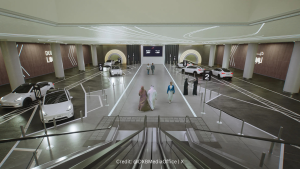
DEWA’s leadership in mobility electrification is also reshaping the emirate’s transportation landscape. With more than 1,500 EV Green Charger points already installed and powered by clean energy from the solar park and rooftop systems, the initiative is accelerating the UAE Green Mobility Strategy 2030. Regulatory frameworks introduced in 2024 opened the sector to private operators, further expanding access and competition. The green data center at the solar park, the largest solar-powered data center of its kind, provides the digital backbone for Dubai’s charging network.
Looking ahead, DEWA envisions a mobility ecosystem that merges clean energy, digital infrastructure and strong partnerships. As Al Tayer describes, the goal is not only to power electric vehicles but to build an integrated energy-mobility system that supports sustainability, innovation and long-term economic development.
Dubai’s transformation into a global clean energy hub continues to accelerate, driven by bold leadership, advanced technology and a commitment to long-term climate resilience. DEWA’s model demonstrates how strategic investment, digital intelligence and collaboration can redefine what is possible for cities seeking to build low-carbon, future-ready infrastructure.
As the world looks toward new pathways for clean energy and sustainable mobility, platforms such as the Electric Vehicle Innovation Summit (EVIS Abu Dhabi 2026) and EcoMobility Global (EMG 2026) provide a vital stage for showcasing these advancements. Taking place on 13–14 October 2026 at ADNEC Centre Abu Dhabi, the events will unite global leaders, innovators and energy experts to explore how the next decade of investment, technology and collaboration can accelerate the shift toward smarter, cleaner mobility and energy systems worldwide.
Source: DEWA charts path to clean energy with AI-driven innovation